

“Pause, Reflect and Hope” There is Treasure to be found in 2025!!

Before you rush headlong into 2026, give yourself permission to pause—whether for a moment, an hour, or an entire day. These three words have been echoing in my spirit as 2025 draws to a close: Pause. Reflect. Hope.

What unfinished business is still tugging at your heart?
What unsent message, unspoken truth, or unpursued dream is still sitting quietly in the corner of your year?
Is it possible that a prayer you prayed was answered—just wrapped in a package you didn’t expect?

If you would truly pause, intentionally reflect, and courageously hope before this year ends, you might uncover the direction, correction, or clarity that positions you for victory in 2026. Life rarely shouts; it whispers. To hear it, you must lean in, quiet your mind, and become still.

The treasure is found in discerning what must remain in 2025—and what deserves to be carried forward.
Remember: If you refuse to adapt to the future, you will spend your energy justifying your past.

Ask yourself:

  • What thought, action, or behavior is no longer serving me?
  • What narrative am I repeating—to myself or others—that needs to be rewritten?
  • What mindset must I release so the Creator can do something new within me?
  • Did 2025 reveal areas where I’ve been stuck in analysis paralysis—overthinking without movement?
  • Who am I when no one needs anything from me?
  • In 2025, was I more Self-Led or Savior-Led?

I’m walking through this same process of pausing, reflecting, and hoping. And I’ve uncovered my own “treasures”—reminders, journal entries, conversations, books, and shifts in perception that I’m carrying into 2026. A few of them include:

  • Choose long-term vision over short-term comfort.
  • Discipline—especially when no one is applauding—produces lasting results.
  • Patience must be tested to be strengthened.
  • Give myself and others “space and grace” to grow.
  • Foundations are being laid even in seasons of quiet.
  • Love and boundaries can coexist.
  • Don’t judge a situation while you’re still in the middle of it.
  • God’s goodness and mercy are accessible 24/7.
  • Allow people to show up as they are—and then choose your response.
  • God either delivers or develops.

Once you’ve paused and reflected, check your hope barometer.

Hope for the best—always—but prepare wisely for the challenges life may bring.

Hope is the expectation and desire for something to happen. Scripture reminds us: “Hope deferred makes the heart sick, but a longing fulfilled is a tree of life” (Proverbs 13:12). Delays can strengthen character, sharpen discernment, and reveal whether a desire is truly from God. But unmet expectations, when repeated, can weigh heavily on the heart.

So ask yourself: Am I full of hope—or running low?

To uncover even more treasure from 2025, consider:

  • What was the single most impactful blessing of my year? (Expect even more in 2026.)
  • What moments brought me the greatest joy? (Repeat them when you can.)
  • What low points taught me the most? (Carry those lessons forward.)

May 2026 be your strongest year yet—spiritually, emotionally, and physically.

Blessings,
Dr. G

“Go Again”

How many of us give up in the “middle” or pass judgment on what is happening in our lives? Have you ever started something and because it became difficult you gave up before the end? A prime example can be found in the bible when Elijah instructed his servant in 1 King 18: 43-44 to “go again” for seven times before he finally saw a little cloud the size of a man’s hand, rising out of the sea. Then Elijah took an even bigger step by instructing his servant to tell Ahab to prepare his chariot and leave quickly because the rain was coming. Do you think Elijah had an inkling of doubt, but his faith was bigger because of his determination displayed by sending his servant back seven times?

We are in a season where doubt can not only creep in but stop us dead in our tracks. “Go Again” is not even an option when doubt has taken hold. Doubt has the potential to stops us from doing what we are called to do because it disrupts the core of belief – belief in ourselves, our God, in our purpose, and in the possibility of success. Doubt stops us because it creates uncertainty- and the human brain craves certainty. At its core, doubt signals a perceived risk: that we might fail, be judged, lose something, or not live up to expectations (our own or others).

Do you have the drive, determination, or motivation to go again? Or are you feeling depleted? I overheard a conversation between two people, and one said just “don’t throw in the towel” but the feedback was “I can’t even find my towel”! We all go through times that it feels like there is a “compounding” effect is happening in our lives with several changes all happening at once. An ideal way to describe it is “the past, present and the future” have collided.

How do we “go again” in our personal lives? In one of my devotionals by Lysa Terkeurst (Seeing Beautiful Again) she reinforces the point that “it’s not easy to keep going with God’s instructions when there is no evidence of our situation changing. It’s hard to continue moving forward when we don’t see God move the way we thought He would. Nevertheless, there are key points (look, climb, prepare) on how Elijah instructs his servant initially for him to “go again” that we can learn from:

  • Elijah instructs his servant to look towards the sea. Sometimes we must shift our focus or perspective at the onset so we can remain steadfast throughout the process. Try to avoid focusing on others and their journey because this can deplete and discourage you to “go again.” Oftentimes we see the finished product of someone else’s journey and we have no idea how many times that they have fought to stay focused and challenge their perspective before the victory.
  • Elijah instructs his servant to climb to a “higher” point on Mount Carmel for a better view. Could we be operating on a lower level than what we should? Is our vision or view obstructed by life issues? Are we focusing on what is happening in real time versus looking at the bigger picture?
  • Finally, Elijah instructs his servant to prepare his chariot and leave before the rain delays him. This was after seeing a small cloud, no thunder or rain. Are we willing to move in faith and prepare before we have what we believe? Elijah was not preparing for a quick shower of rain but rather a downpour with the potential to delay traveling. What are you preparing for?

These key points of adjusting your vision, climbing to a higher point in your thinking, and preparing to receive could all be “game changers” for you and me!

Make the decision that either you are going to make it OR you are going to make it. No other option!! Having this mentality coupled with Elijah’s key points will hopefully help you to “Go Again” and walk by the measure of faith you have inside of you and not by sight (2 Cor 5:7)

Best regards,

Dr. G

“What Do You See?”

Land view vs. Aerial view (Your Outlook determines Outcome)

The next time you are faced with a situation, decision or challenge ask yourself am I looking at the aerial or ground view of my situation? The good news is you can change your view which will change your outlook and eventually your outcome. So, what is the difference between an aerial or ground view?

Photography gives us great examples of both. Ground photography is the traditional form of capturing images, where the photographer operates the camera at ground level. There are indeed limitations or cons of the ground view (here are a few):

  • Perspective is limited. The same scene or subject might look vastly different and perhaps more compelling when viewed from above, which is something ground photography cannot achieve.
  • Your view can be obstructed which makes it difficult to capture clean, uncluttered images.
  • Space constraints- difficult to capture the full breadth of the scene you are looking at.

 There are some pros too for viewing things from a ground too:

  • Features in the foreground usually appear larger; features further away appear smaller.
  • Captures intricate details, revealing the texture and minutiae that would be impossible from a distance. 
  •  Offers the opportunity for a more controlled environment.

In practical ways how would a land/ground view of our world affect us? I am glad you asked! See below:

  • Our problems/challenges can obstruct our view.
  • Because we have limited views we can be tempted to be intimidated by our circumstances.
  • Tempted to believe the report of man versus the report of God’s Word for our lives.
  • What we see often can feel insurmountable, impossible, and too large to overcome (ex. giants in the land)
  • Our vision for our life is shaped by our senses (see, feel hear, touch, and smell).
  • We have a tendency to give up when we are faced with setbacks in our lives.
  • We can be tempted to speak our circumstances rather than what God promises us about our situation.
  • We focused on giants rather than the God of the impossible
  • On a more positive note, we can see the small snares/traps that we wouldn’t be able to see with a broader view.

What about an Aerial View?  Also known as a bird’s eye view. This is the viewpoint seen at a high elevation

The Pros are:

  • Changes Perspective
  • Provides a holistic picture
  • Potential for unobstructed views

The Cons are:

  • Additional cost and investment
  • Weather dependency- may face delays or cancellations due to unpredictable weather changes.
  • Increased knowledge required
  • Higher risks potential

How do I know if I am viewing life through an aerial view?

Aerial view characteristics are:

  • Ability to see beyond my current situation or see the big picture.
  • Perspective is not shaped by senses but by vision.
  • Resist jumping to conclusions and making assumptions.
  • Out of Box thinker
  • Forward Thinker
  • Optimistic rather than Pessimistic
  • Determination supersedes circumstances
  • Feel fear but forges ahead anyway!
  • Declare, Decree and Believe God’s Words personally no matter what it feels or looks like.
  • You see it before you see it with your natural eyes
  • You are not moved by your current circumstances

What is the purpose of aerial view?

 Having “aerial vision” in our lives can serve several purposes:

  • Helps us to walk by faith and not by sight
  • Helps us to overcome the naysayers we often encounter
  • Gives you the strength and determination when everything appears to be impossible

Great example is the story of Joshua and Caleb in Numbers 13:30-33. They had a “aerial view” of the promised land. 30 And Caleb stilled the people before Moses, and said, Let us go up at once, and possess it; for we are well able to overcome it. However, the twelve spies had a ground or land view of the promised land. 31 But the men that went up with him said, We be not able to go up against the people; for they are stronger than we. 33 And there we saw the giants, the sons of Anak, which come of the giants: and we were in our own sight as grasshoppers, and so we were in their sight.

Again, the next time you are faced with a situation or challenge ask yourself am I looking at the aerial or ground view of this situation? The good news is you can change your view which will change your perspective and eventually your outcome. Changing your view/perspective can reduce stress and anxiety. By changing your perspective, you can learn to focus on the positive aspects of your life, rather than getting stuck in negative thought patterns. Also, it can help you build resilience, increase creativity and improve relationships. In addition, this can help you achieve your goals.

Drone Photography, JRR Aerial Imaging, 2020

Blessings,

Dr.G

Myrtle Greene, PhD, LMHC, CAP, ICADC


“Be Still”

What are the benefits of “being still”?

At the end of 2023, with all the hustle and bustle ending from the holidays with family and friends’ gatherings this would be an ideal time to slow down. Be still to revive, refresh and reset as a new year approaches. What can happen when we do? There are benefits in being still. Most importantly, quiet time with God allows our heart to connect with His. If you struggle with overwhelm, weariness, or you just need a simple reminder that His grace is enough, you’re in the right place for encouragement to rest in Christ so you can live a life that reflects His heart.

 What is the biblical definition of being still? To be still” is “to keep silence” (Psalms 4:4, etc.) and so “to be quiet” (Psalms 107:29, etc.) or “inactive” in any way (Judges 18:9; 1 Kings 22:3; Zechariah 1:11, etc.).

Another great benefit to remember is when God says BE STILL in His Word, it is because He has an important revelation for us. It is because He wants to draw our attention and focus to something in particular. In Hebrew, the word for “be still” in this verse means “relax, sink, let go, cease.” In this verse, He’s asking us to cease from the busyness of our day.

Reflection is an excellent exercise to do in your stillness. Recalling the lessons learned, unction, thoughts and leadings from the Holy Spirit. Here are a few of mines from 2023:

  • Note to self: It is a lot, but God is BIGGER!
  • Pray to see things from God’s perspective.
  • Remember that disruption and chaos have the potential to lead to the perfect will of God.
  • Leap!! You are ready!
  • Level of Consciousness – how awake are you in your life??
  • Boundaries are necessary.
  • Embrace His Grace
  • Ask yourself…why would you not??
  • You can be still because God is active. You can rest because He is busy.
  • Live by the passion in your heart and not the pressures from other people.
  • Finally, narrow your focus and broaden your life! Cut out “good things” to pursue “God things”.

Remember time spent in stillness is never a waste of time. Especially if our quiet time is spent with God. We feel more peace and joy in our lives. When we take the time to connect with God, we are better able to handle the challenges of life. Prioritize those quiet moments with yourself and with God each day, and you will be blessed in ways you never thought possible in 2024!

My prayer for you from Numbers 6: 24-26: The Lord Bless you and keep you; The Lord make his face to shine upon you and be gracious to you; the Lord turn his face toward you and give you peace.

Happy and Blessed 2024,

Dr. G

The Lesson from the “Old Barns”

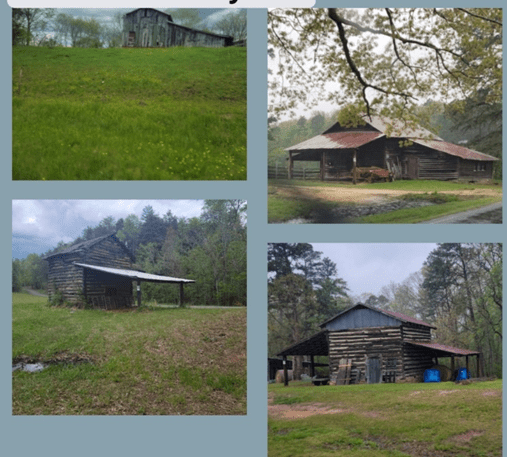
My fascination with “old country barns” sitting on a beautiful landscape runs pretty deep. My visit to my home state of North Carolina in the “tobacco belt” of the state really stirred it up again as I rode the long and winding roads. I think I finally understand the fascination with old barns. They represent the days of old when life supposedly was simpler and slower but more manually difficult. There were no instant messages, social media, uber eats or cell phones. Technology was represented with “maybe” one remote less TV, house phone and one bathroom or outside toilet. The black and white TV shuts off by itself at night after a certain time, maybe back then sleep was appreciated and valued more. Over 70% of food consumed was homegrown or fed. There were very few “8-hour days” but work was done until it was completed for that day.

Barns played a major role in the livelihood of farmers, including my family. Tobacco barns once numbered a half million and were fixtures on farms across the state of North Carolina. Today, only about 50,000 still stand, vestiges of the tobacco industry, deteriorating reminders of the leaves’ influence on our culture. Barn locations may look random, but in fact were carefully considered for efficiency, namely proximity to human labor and mule-drawn carts when the “cropping,” or harvesting, was underway. barns were deliberately located far enough apart to reduce the risk of fire. The tobacco barns would stand empty and unused — and unlovely — until the next season.

When I look at the old tobacco barns in fields. I see the beauty of the old days while others may see dilapidated, deteriorating barns in the fields. Questions like the following plagued my mind such as who was the original owner? How much was the barn used? Were the profits from using the barn able to meet the needs of the owners? Why were barns built in open fields all alone? Was the upkeep done continuously to keep the critters out or were there years of neglect? Was it built well enough to weather the cold winters and the hot summers while continuing to be used? If so, how long did it function fully for its’ original purpose?

Of course, the barn’s main purpose was to house tobacco and be dried with intense heat in order to bundle and sale for profit. However, were they utilized in some other ways? Did someone use the barn as a place of refuge? Their hideaway or sanctuary to lift up prayers. Was it the only place they felt peace or even safe?  If those walls could talk? I wonder what they would say.  Do they hold secrets of yester years that have never been spoken? Did their barn walls witness unspeakable acts being done? We will never know the stories of “the barn” because the original owners are long gone. However, the barns still stand not in their original form when built but tattered, inoperable and could not possibly function in its intended use. Nevertheless, it stands and now symbolizes the days of old and could be described now as iconic, historical, and picturesque for those who appreciate it.

My take on all of this is …just like the barns, we may not be functioning the way we were originally design because of what we have endured over the years. Maybe it was the loss of loved ones, dysfunctional relationships, or illnesses. In some ways we may be tattered and feel inoperable. Nevertheless, we continue to stand but unlike the uninhabited barns we can still find purpose and fulfillment.

Whether we realize it or not, God has already put purpose in our heart but how do we see it to fruition?

Glad you ask…my suggestions:

  • Don’t focus on what you have lost but rather what you have left.
  • Take what you have left and offer it back to the ONE who created you.
  • Ask God to give you a dissatisfaction for the status quo and a desire for something better.
  • Trust Him to show you next steps and do “only” that.
  • Ignore the naysayers and doubting Thomas that cross your path.
  • Don’t let anyone who hasn’t been in your shoes tell you how to tie your laces.
  • Finally, remember overthinking kills happiness. As a man thinketh so is he (Prov 23:7). The heaviest burdens that we carry are the thoughts in our head.

Best regards,

Dr. G

Hit the Refresh Button for a “Sozo” Life

God, make a fresh start in me, shape a Genesis week from the chaos of my life.

 (Ps 51:10) MSG

Even though there is a continual bombardment of sadness, evilness and destruction that can drain us of hope and faith we are promised a “Sozo” life in Christ. Sozo is a Greek word meaning wholeness… • wholeness in spirit • wholeness in soul (mind, will, and emotions) • wholeness in body. It is complete healing for body, soul, and spirit. It is the will of God and our destiny for all of our lives.

What is your destiny? Where is your refresh button? Remember, God has shaped and prepared each of us to play a unique role at this point in time that will bring glory to God, share the grace of God, and extend the reign of God in specific ways. How do we get there?

“Make me over again” song lyrics by Bri Babineaux says it all: My heart is ready to receive. Make me over again, I’m ready for a change. Renew the right spirit in me.

As you respond to what God shows you, hit the refresh button and begin to live in God’s preferred future. Then His vision for your life will become more vivid and real.

Prayer:

Father in Jesus Name I pray for everything that has held us in “clutches” and may we be release from its grip. Whether it is past memories, toxic relationships, negative emotions, bad decisions, ungodly guidance or traumatic events, please set us free to live “FREE”. Help us to hit the refresh button that clears our pathway. Help us to have the courage to turn the page, end the chapter and put a period at the end of somethings that no longer serves our God given destiny.

Come Holy Spirit and refresh us anew (Ps 51:10) so that our steps are intentional and aligning to your will for our lives. Anoint us with the courage to say goodbye to the old while saying “hello” to the new (people, places, things) that bear godly fruit in our lives (Eph 4:22-24)

Help us to leave outcomes to you by following your leading in every area of our lives and keeping the ultimate destination in mind. We stand on Ezekiel 36:26 (ESV) that you will give us a new heart, and a new spirit and remove the heart of stone from our flesh and give us a heart of flesh.

In Jesus precious name…. Amen

Dr. G

The “Waiting Room”

“Annoyance to Opportunity”

How do you move from annoyance to opportunity while you are waiting? How do you build up your tolerance to wait? My blog provides some good tips and ideas for you while you “wait” for change to occur in your life:

In practical terms the waiting room is defined as a room (as in a doctor’s office) for the use of persons (such as patients) who are waiting. Other words for the waiting room are waiting area, foyer, reception, concourse or a meeting point. Why is a waiting room important? The existing evidence concludes that the waiting room experience is an important driver of patient satisfaction. Surveys of primary care offices show that how patients feel about their physician encounters and the quality of their health care is directly related to the impression of their time in the waiting room. One study published by the College of Family Physicians of Canada titled The Waiting Room “wait” details about going from annoyance to opportunity. Isn’t annoyed a good way to describe how we can feel when we are waiting for something in our lives to change? Initially, we can feel annoyed because the wait seems too long. This can quickly move to agitation and frustration because how we thought our lives should be unfolding is not happening. Maybe we aren’t where we want to be in life in regard to the things we wanted to accomplish. Or maybe, the people in our lives aren’t progressing fast enough to suit our timelines. Annoyance is almost inevitable because we cannot see the big picture or what is happening behind the scenes. Usually in many waiting situations, there is no visible order. 

Therefore, how do we remain joyful and hopeful while sitting in our personal “waiting room”? Hopefully, while we are in our waiting rooms for a while we will begin to realize the “opportunity” that exist to bloom where you are planted. Often when we are in our waiting room, we do not seize the opportunity to grow whether that is intellectually, emotionally or spiritually. Let’s dig a little further by asking the next question…..


What is the psychology behind waiting? I am glad you ask! I read a paper by David Maister, The Psychology of Waiting Lines. The piece was aimed at people who operate stores, restaurants, doctors’ offices, and other places where people fuss about being kept waiting. Maister’s main point is that the actual time we’re waiting may have little to do with how long the wait feels. Just to mention a few facts from his paper that stood out to me was if you are unoccupied the time feels longer, anxiety makes waiting seem longer and the more valuable the service, the longer a person is willing to wait. To sum that up, if I occupy myself while waiting with learning new things about myself, others, and the world it helps to reduce anxiety. Also, the value I have already placed on what I am waiting for helps me to wait more patiently. What are you waiting on? Perhaps you could get busy by learning, networking, and making the most of your waiting room experience to move from annoyance to opportunity!

Some of us are waiting and believing for God to perform His perfect will in our lives. In the scriptures, the word wait means to hope, to anticipate, and to trust. To hope and trust in the Lord requires faith, patience, humility, meekness, long-suffering, keeping the commandments, and enduring to the end. To wait upon the Lord means planting the seed of faith and nourishing it. Waiting biblically is to be actively filling your mind with the truth about God’s character through His word.  Waiting on God is not only difficult; sometimes it seems impossible. We want things to happen in our own timing, according to our plans. But God doesn’t operate on our schedules and expecting that He will sets one up for disappointment.

Let’s take a look at the benefits or opportunities from waiting on God in our personal waiting rooms:

  1. We find strength (Isaiah 40:31)
  2. We learn not to be anxious (Phil 4:6)
  3. Waiting on God can keep us out of trouble (Genesis 15:4)
  4. We understand the sovereignty of God better (Isaiah 46:10)

I believe Ps:27:14 sums it up perfectly:

“Wait on the Lord; be of courage. and He shall strengthen their heart. (Ps 27:14 KJV) In the Message bible it reads: Stay with God! Dont quit. I’ll say it again: Stay with God.

In conclusion, moving from annoyance to opportunity while you are waiting is not that difficult, but it does take intentionality on your part. I hope you have gained a greater appreciation for “waiting” and the fact that it comes with so many opportunities for emotional, intellectual and spiritual growth.

Best regards,

Dr. G

The “Table”

The dining table has always been a symbol of many things: the place where we nourish ourselves, where we come together, celebrate important milestones, share experiences, and create new understandings.

I recently got rid of my dining table and chairs. In the process, I reflected with my family about all of our experiences we shared around the table. This table/chairs held a significance place in my home for over 20 years. It was the place we had family dinners, shared loving and sometimes heated discussions. My family and I disagreed of the exact date of purchase and we laughed about all the celebrations around the table for loved ones and friends and our dog! We reminisced about the different gatherings of people who sit at that table for celebrations and for times of sadness/comfort. A lot of financial discussions, informal meetings, board games played and meals took place there.

After 20 years, my table begin to show signs of wear and tear. Similar to my table, I have scrapes/scratches/dents from my past. From a distance or even close up they may not be that visible just like my table, but they are there. My table continued to function as we purchased it for with all the scratches/scrapes and worn areas. I ask myself am I functioning in the purpose in which God destined me to do? Or have I allowed my scars/scratches/scrapes from my life over the years hinder me from fulfilling my purpose?

Remember, we all have a purpose and destiny. The good news is that God already knew about every dent, scrape and scratch that we would experience in this life. Yet He still created and fashioned all of us to do good works with a specific purpose in mind. Even though I decided to get a new table and let go of the old one it still has a lot more to give to the next kitchen it will occupy. My table now occupies another family’s kitchen and I hope they make great memories as my family and I did around that table. As we move to that next place/season of our lives, I hope we all continue to fulfill the purpose of God for our lives even with our scrapes, scratches and dents.

Below are some tips for not allowing your scrapes/scratches/dents to hinder you from fulfilling your purpose:

  1. Know You’re Not Alone. Every person in this world has their own scrapes/scratches/dents.
  2. Ask For Help. …some of our scrapes/scratches/dents are not visible but just as real and can hinder us.
  3. Feel Your Feelings but resist being led by them.
  4. Accept Support. …two is better than one (Ecc 4:9-12)
  5. Help Others. …getting our mind off ourselves helps to provoke gratitude in us.
  6. Change your Perspective….some experiences may not feel good but are good for us in the larger scheme of things.
  7. Finally, see yourself as God sees you. Your scrapes/scratches and dents don’t define you God does!

All the Best,

Dr. G  

Mountain Climbing Strength!

Growing up we often sung a hymn in church that went something like this “Lord, don’t move the mountain but give me the strength to climb. We are indeed in an “mountain climbing” season because of personal and global challenges. How do we stay sane and remain in a peaceful state during these unprecedented times to fulfill our destiny? How do you keep moving forward up the mountain when everything is so unpredictable from this year to the New Year (2022)?

My advice…One Step at a Time.

In addition, there are some practical and spiritual steps you can take to climb whatever mountain is in front of you.

Since I have never actually climbed a mountain but only engaged in some strenuous uphill walking and hiking. I researched and found these practical recommendations.

The good thing about these practical recommendations for mountain climbing are they can be implemented for our mountain of challenges.

Remember to:  Pack, Build, Take, Become, Get, Prepare, Know, Plan, Face and Encourage is the steps to successful mountain climbing. Can these steps be used when we are facing our own “mountain” that appears to be impossible, treacherous and insurmountable? Absolutely we can!!

  1. Pack layers of clothing that you can add or remove as needed when mountain climbing. What do you need to pack? Make sure you have the coping skills to endure and climb your emotional mountain you are facing. Often times when climbing your personal mountain, you have to be “pack” patience, flexibility, prepare for the unexpected and be willing to take off or let go of what is no longer needed or working for you.

Most important…. pack the Word of God!! You can do this by meditating and reading it daily. Remember, In the beginning was the Word, and the Word was with God, and the Word was God (John 1:1). Find a promise for our problem and hang on to it.

2. Build up on the basics. Building upper-body strength is important for mountaineering. Building up on your most holy faith (Jude 1:20) is important to do before you desperately need it. It is less difficult when you are confident of God’s Love for you when climbing that treacherous mountain with no end in sight. Also, building up on self-care habits because sometimes taking care of oneself is non- existent when climbing that emotional mountain.

3. Pick your target. …know where you are going…Oftentimes we are all over the place and fail to recognize when we have arrived at our destination because it doesn’t look like we thought it would.

4. Take a course- it is recommended that “before” you attempt mountain climbing to take a course. What courses would benefit you in what you are pursuing? Remember that knowledge is power. Learn something new…get informed…Read God’s Word…read books…view webinars…subscribe to a blog…take a course.

5. Get the gear– What gear will need for your mountain? A better attitude, different perspective, new outlook or a faith increase.

6. Prepare for altitude and low oxygen- Climbing is indiscriminate of gender. Both success and failure happen no matter who you are. We don’t get what we want but we get what we prepare for. The same with the mountain you may be facing so don’t take it personally but do it with a smile, letting go of the things you cannot change, expect days of adversity and triumph. Finally, focusing on what is in your hand to do and nothing more.

7. Know your strength- being able to recognize your weakness is a strength. Know when to ask for help so you can get to the top of mountain a lot quicker. Build that team of support! Great advice from my previous pastor- “staff your weakness”. You don’t have to good at everything but know who is and invite them to be a part of your team. Your team may include different people some family members, close friends, health care professional, pastor and even neighbors based on the mountain.

8. Plan, plan, plan. … The mountain is going to do what the mountain is going to do. There may be bad weather, hot weather, avalanches, or difficult terrain and the climber must account for all of these factors in training. Does that sound similar to climbing an emotional, financial or health mountain? We are guaranteed to faced tribulations, difficulties, and setbacks (John 16:33). You have to expect ups and downs and account for all the factors when training to overcome and climb your mountain.

9. Face your fears – Climbers are taught to face what they fear the most first. Climbing can be scary, as you are faced with steep drops and the possibility of real danger. Therefore, one of the best places to start your mental training for climbing that mountain is by facing your fears. Start by separating what poses an actual risk to what you believe could harm you.

10. Finally, Encourage yourself!– When you genuinely believe in yourself and your God given abilities, your climbing will be positively impacted. Something may feel or look impossible, but you need to believe that it could be possible and take the risk. Add some positive self-talk and scripture promises as you move forward up that mountain. Remember, your mouth is the steering wheel of your life. Speak Life and Speak Faith!!

Blessings,

Dr. G

The Bonus Room

Homes are often designed and built to include a “bonus room”. What exactly is a bonus room? Why is it called a “bonus room”? According to Wikipedia, a bonus room is a room created by remodeling or adding an addition that does not meet local building code definitions for traditional rooms. For example, codes will typically require that a bedroom have a closet, a window, and a certain number of electrical outlets. Ok now that we know what it is by general definition you may ask why am I even elaborating on this topic? I am glad you ask ….

I currently have a bonus room in my home that I set up as an additional bedroom. I have designated the room as my prayer room/guest bedroom. I usually visit the room on a daily basis. A couple of days ago, I had a thought about “what if my life” could be as tidy and predictable as my bonus room? I have it decorated to my taste, nothing is ever out of place, and I know what to expect each time I enter. It does not take faith to enter because I know what is there already? Why couldn’t our lives resemble a perfectly set aside bonus room? Is that even a rational thought to ponder? How realistic is it to think we can actually set in order the events of our lives? It is very unrealistic, but we often get upset if our nicely predictable life gets shaken up or changed. When in reality we have no control over what occurs BUT we do have control over our responses.

I can recall the tirelessly days that turn into years that I spent attempting to make all the right decisions so I could get the preferred outcome in my life. I guess you know what I found out it. My “bonus room” attempts did not yield me the results I was wanting. Actually, the results were so far from what I wanted or expected. The emotional pain I encountered felt unbearable at time from my disappointments. I questioned everything in my life, compared my life events to others and I came up empty.

Finally, I surrendered my plans and predictions and begin to trust in the sovereignty or the supreme authority of the God I accepted in 1985. I truly learned the meaning of God’s sovereignty in 2014 when a close family member transition to heaven. I also learned that I did not need to build “bonus rooms” in my life but I could trust God with the outcome in every circumstance. As I write this, I am thinking of some areas currently that I wish I could predict the outcome but I know it is in God’s hand.

What about you? Have you had some “bonus room moments”? Have you experienced some times that you wished for nothing to be out of place or no unexpected events to occur, and you didn’t have to exercise faith? You probably discovered it wasn’t possible too. However, we can enter into God’s rest by believing His promises such as:

  • Phil 1:6- He who begin a good work will complete it until the day of Christ Jesus
  • Isaiah 54:17- No weapon formed against you will prosper and every tongue that rises against you He will condemn.
  • Psalm 32:8- I will instruct you and teach you in the way you should go.

Can we accept that “bonus room” expectations only happen in the movies or our dreams? Also, can we accept that God has a good plan for our lives that will include trials and tribulations?

Furthermore, can we accept the fact that emotional pain is apart of living in this fallen world? Nevertheless, we may not have “bonus room” moments in our lives but we do have the strength to get up and not give up when life gets messy.

Be encourage and remember “nothing last forever” and God will give us “beauty for ashes” if we don’t faint or give up!

Best regards,

Dr. G